The history of Sandvikengård
From Anna at Hagen's gift to a vibrant course and camp site
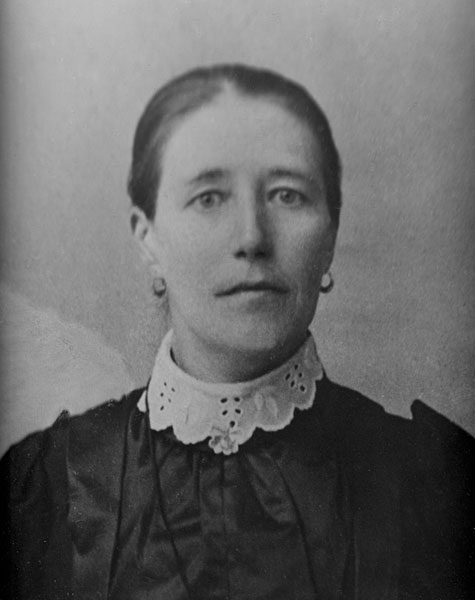
Anna on Hagen donated her small farm to EFS
1920–1930s: The foundation
At the end of the 1920s, Anna Olsson — known as Anna on Hagen — donated her small manor by the shore of Lake Värmen to the EFS in Värmland. Her vision was simple but powerful: to create a place where missionaries returning from Africa could find rest and encounter God’s love. People called her the ”Fosterlandsstiftelsen” for her generous gifts.
In 1931, the Junior Home (Sandvikengården) was inaugurated by Mayor Anders Nilsson. The first new building—today known as the Reader’s Hut—contained accommodation on the ground and first floors, as well as a chapel. As a kitchen, Anna Olson’s small cottage was used. Drinking water was drawn from the well of a neighbor in Lavika and the dishwater was collected from the lake.
In 1934, the household committee reported on in-kind donations from the village of Kronan: flour, peas, eggs, butter, and potatoes. The farm was highly dependent on the support of the local community. In the early years, all work was carried out voluntarily by dedicated EFS members.
In 1932, the first junior camp was organized from July 28 to August 3. In 1933, two junior camps were invited with a camp fee of six kronor.
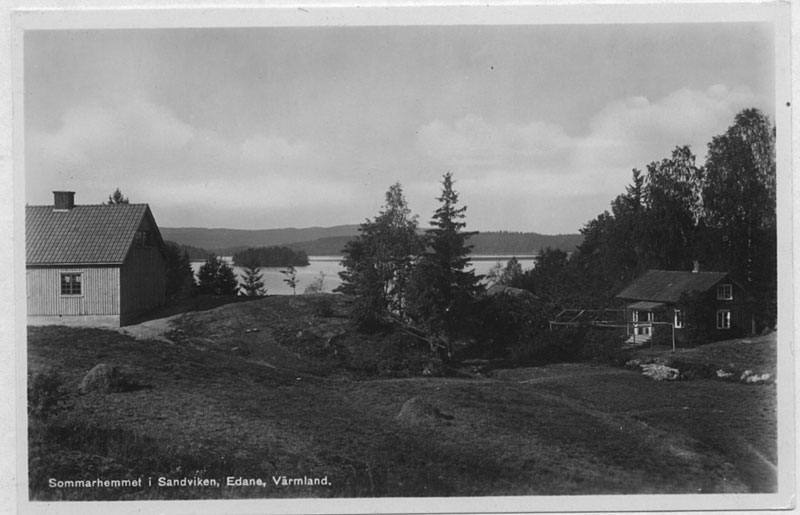
The farm during the 1950s expansion
1950s: Growth and development
In 1951 the first sewing association meeting was held with 200 participants — a sign of the growing interest in the farm. In 1952 Vilma Larsson began working in the kitchen, and she continued every summer until her death in the 1990s.
In 1953, a gas stove was installed and a sewer line was arranged for the kitchen. In 1955, the Lägerstugan was inaugurated with a construction cost of 20,000–30,000 kronor. Over 30 collection lists circulated in Värmland and Dalsland.
In 1957, a Bible course was held with Ole Hallesby from Norway as the main speaker — an event that marked the farm's increasing importance as a course venue. In 1959, a new dining room with a fireplace was built — the current Sunnemo Hall.
At the end of the 1950s, Holger Lundström was hired as a music consultant for EFS in Värmland, and singing and music camps became a new important activity. This music tradition has since been a central part of the farm’s identity.
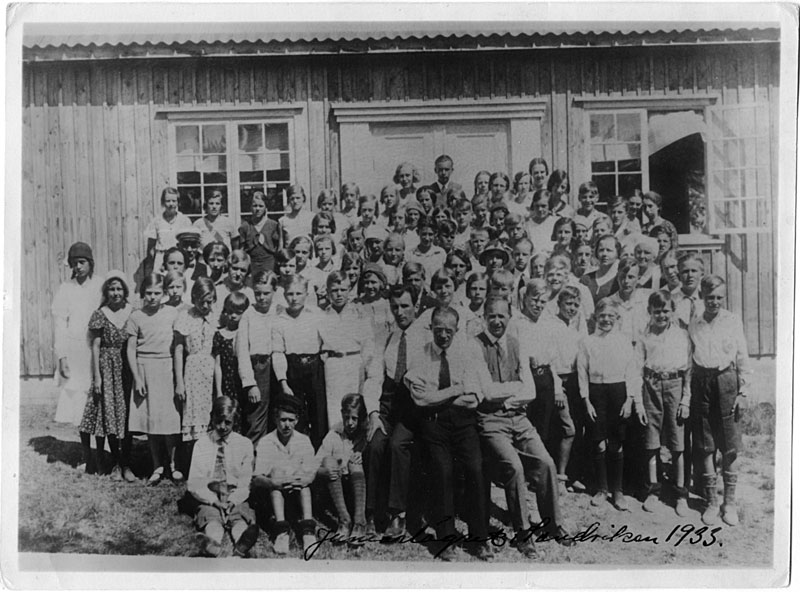
Junior camp 1933
1960s: Confirmation and expansion
In 1960 the first Confirmation camp was organized — a decisive year that became the starting point for a long and successful tradition. Since then, almost 2,000 young people have participated during over 60 years of continuous activity.
The same summer in 1960, boys' and girls' camps (15 kronor) were organized, as well as youth camps and Bible studies. In 1962, music camps and youth camps were organized with Folke Bäckström (his 10th consecutive year).
In 1963, a land grant was received by Märta and Ernst Andersson in Laviken. On this land, the new dining room and kitchen were eventually to be built.
In 1966, Sandvikengården was ”temporarily” allowed to borrow the Thanksgiving bell from Boda parish. In 1967, a decision was made to build a new kitchen and dining room at a total cost of 167,000 kronor.
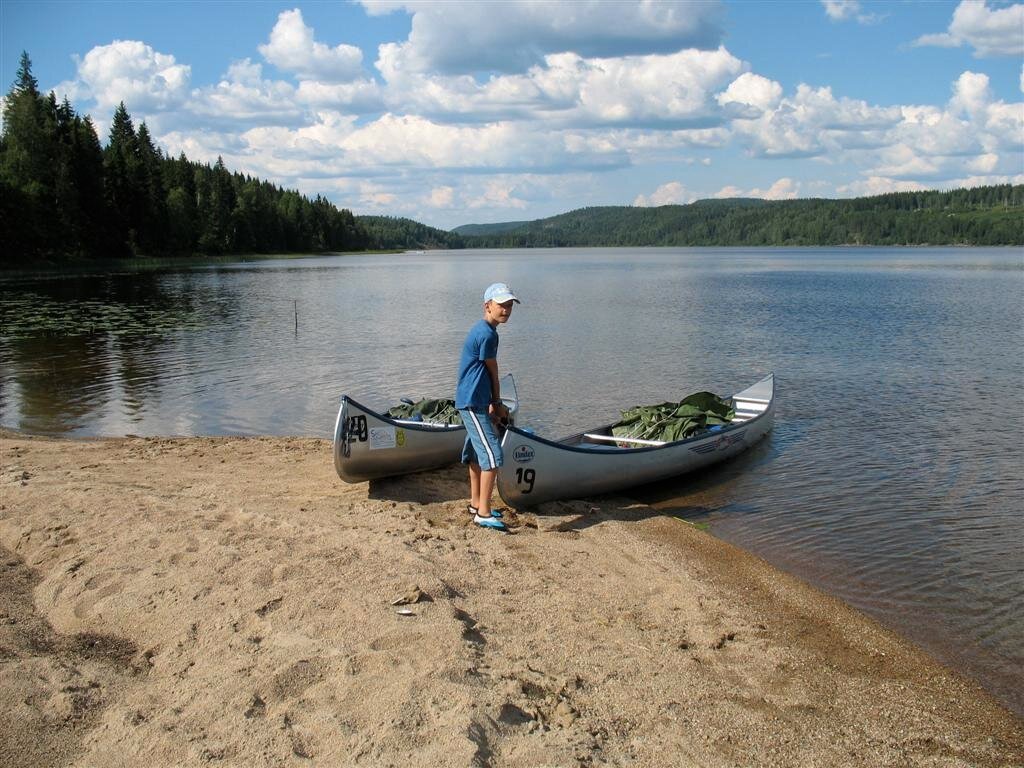
The canoeing activities have been part of Sandvikengården since 1973
1970s: Canoe center and chapel
In 1970, extensive renovations began. The old dining room (Sunnemosalen) was converted into a chapel, and the old chapel was converted into apartments. All the rooms in Lägerstugan had sinks — but only cold water!
In 1971, 400 people visited the farm during the summer holidays. The General Inheritance Fund granted a grant of 80,000 kronor for the expansion.
In 1973, the first children's rowing camp was held with 40 participants. That same year, canoe rental began at Sandvikengården — the first canoe rental center in Värmland, approved by the Swedish Canoe Federation.
In 1974 a new beach was created below the football pitch. In 1979 Martin Frykberg was hired as a caretaker during the summer. The statistics showed 3,229 overnight guests, 2,497 day guests and 1,701 camping days.

The chapel at Sandvikengården
1980s: Sandviken Church and new traditions
In 1982, a unanimous decision was made to build a new chapel. In 1982 and 1984, Sandvikengården received 60 percent of Håkan Hagegård’s Christmas charity concert proceeds from Brunskogs Church.
In 1983, the Sandviken Church was consecrated in May. The church cost 1.4 million kronor including furnishings. The artist Göran Hagegård donated a work that was sold in 100 copies to finance the church interior.
In 1984 the first ”Craft Week of Old Times” was organized — a new tradition that would be further developed over many years.
In 1987 the old bell tower was replaced. The first ”Värmlands Week” was organized. In 1989 the farm purchased 5,000 square meters of new land and organized the first ”Health Care Course”.
Development and renewal in the 1990s
1990s: Great renewal
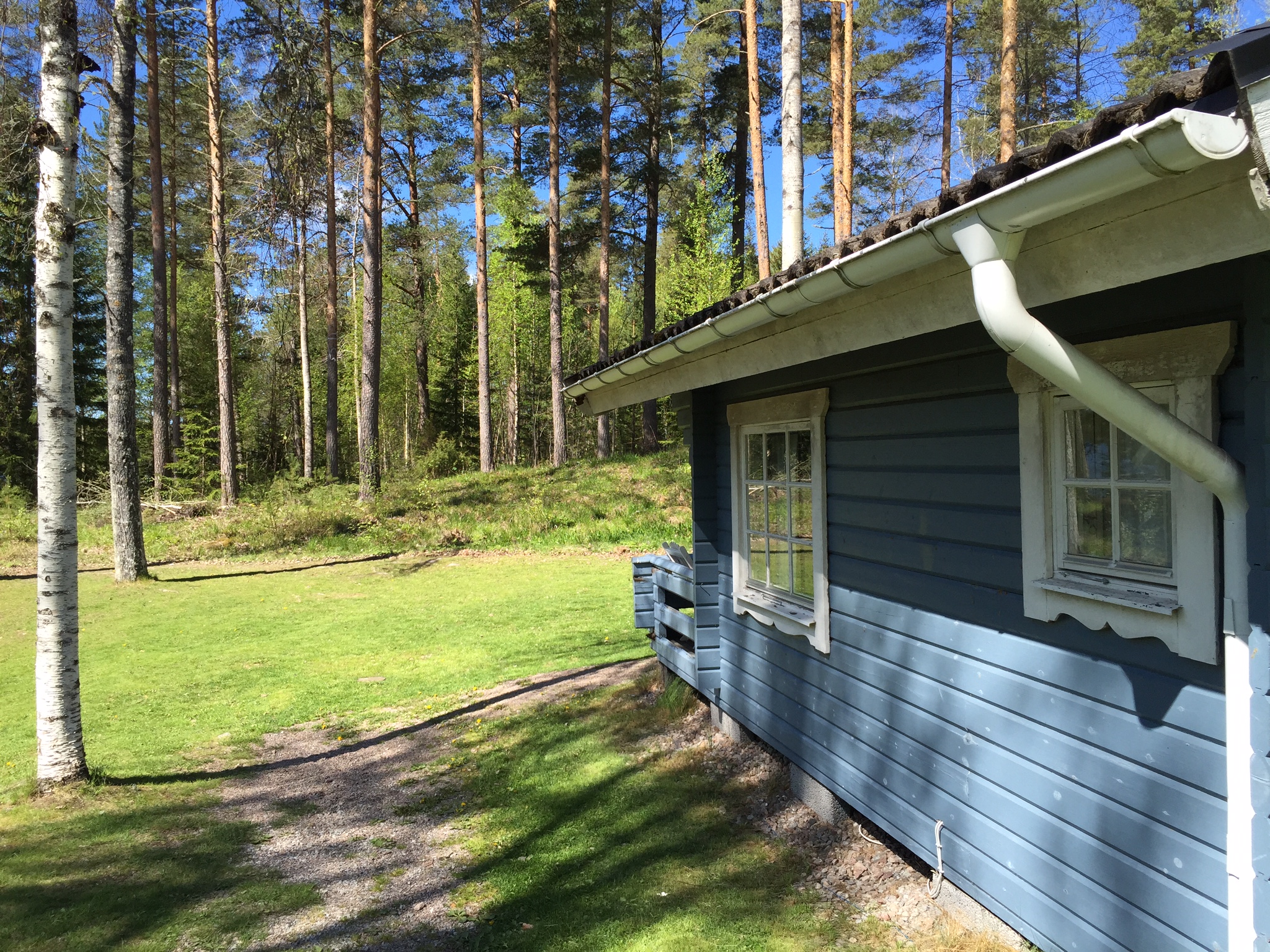
During the winter of 1991 and the spring of 1992, a comprehensive expansion was carried out. The new staff house was built, a new hygiene building with a sauna and showers was completed, and the Humsjöstugan was built.
In 1992 the so-called Bible and OAS Days were organized for the first time. In 1994 a total renovation of Läsarstugan began. In 1995-1996 the Bible Garden was established according to an idea by Per Erik Frykberg.
In 1997, the entire renovation of Läsarstugan was completed with a total of 11 rooms, eight of which had their own toilets. In 1998, Sandvikengården received a letter of donation from John Persson in Gullsbyn, valued at approximately 2.5 million kronor — the largest individual donation in the history of the farm.
On November 21, 1998, the interest association Sandvikengårdens Vänner was formed, on the initiative of Per Erik Frykberg, with the mission to ”promote the development, activities, and finances of the farm.”.
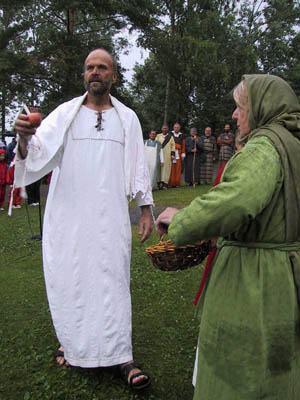
The Man from Galilee – the walking theater performed in 1996, 1997 and 2000
The 2000s and beyond
In 2000, the traveling theater ”The Man from Galilee” performed for the third year in a row with 50 actors and 600 visitors.
During the winter of 2002–2003, a completely new main kitchen was built. The old kitchen was demolished and an extension with a basement was built. In the winter of 2006–2007, the old dining hall entrance was demolished and a completely new entrance was built at a cost of nearly one million kronor — the farm finally got a full-year capacity and served its first Christmas buffet in December 2007.
In 2008, the farm received a will of approximately one million kronor from Wille Karlsson in Edane. In 2009, buildings were converted from direct heating to a water-based mountain/ground heat system.
Today, Sandvikengården welcomes groups year-round with over 30 rooms and four cottages that can accommodate over 100 guests, a church that seats between 150 and 200 people, and one of Värmland’s oldest canoe centers.
MILSTOLPAR
Timeline
1920s
Anna on Hagen donates the manor site by Värmelns beach to EFS in Värmland.
1931
The Junior Home is inaugurated by Deputy Mayor Anders Nilsson. The reading room is ready.
1932-33
First junior camp. In 1933, two camps with a fee of 6 kronor.
1951-56
First sewing circle gathering 200 people. Vilma Larsson starts in the kitchen. The camp hut is inaugurated in 1955.
1957-59
Bible course with Ole Hallesby. New dining room Sunnemosalen. Music camp starts.
1960-63
First Confirmation camp. Music camp and youth camp.
1966-67
Thanksgiving clock from Boda. New kitchen and dining room building. Cost 167,000 kr.
1970-71
The sun room becomes a chapel. The camp hut gets a sink. The inheritance fund 80,000 kr.
1972-74
First costume auction. First children's camp. Canoe center starts.
1982-84
Sandviken Church is inaugurated in 1983 (1.4 million SEK). First Old Times.
1987-89
First Värmland Week. 5,000 square meters of new land. The first fitness course.
1991-92
New staff house, hygiene building with sauna, Humsjöstugan.
1994-96
Total renovation of Läsarstugan. The Bible Orchard is being established.
1997-98
Gift letter from John Persson (~2.5 million kr). Friends' association formed.
2002-03
A new large kitchen is being built. The old kitchen is being demolished.
2006-07
New entrance provides year-round capacity. First Christmas buffet in December 2007.
2008-09
Willie Karlsson's will (~1 million kr). Geothermal heating system installed.
Become part of history
The history of Sandvikengård is still being written. The farm has gradually evolved from the small farmstead in 1931 to today's modern training and camp grounds. Welcome to join us!
Contact us Svenska
 English (UK)
 Deutsch
 Français
 Nederlands
 Norsk bokmål
 Dansk